Science fiction
The Ghost-Zone Protocol
In a high-tech transit hub, a meticulous worker risks his entire career to protect a stranger’s fleeting, illegal connection to a fading memory.
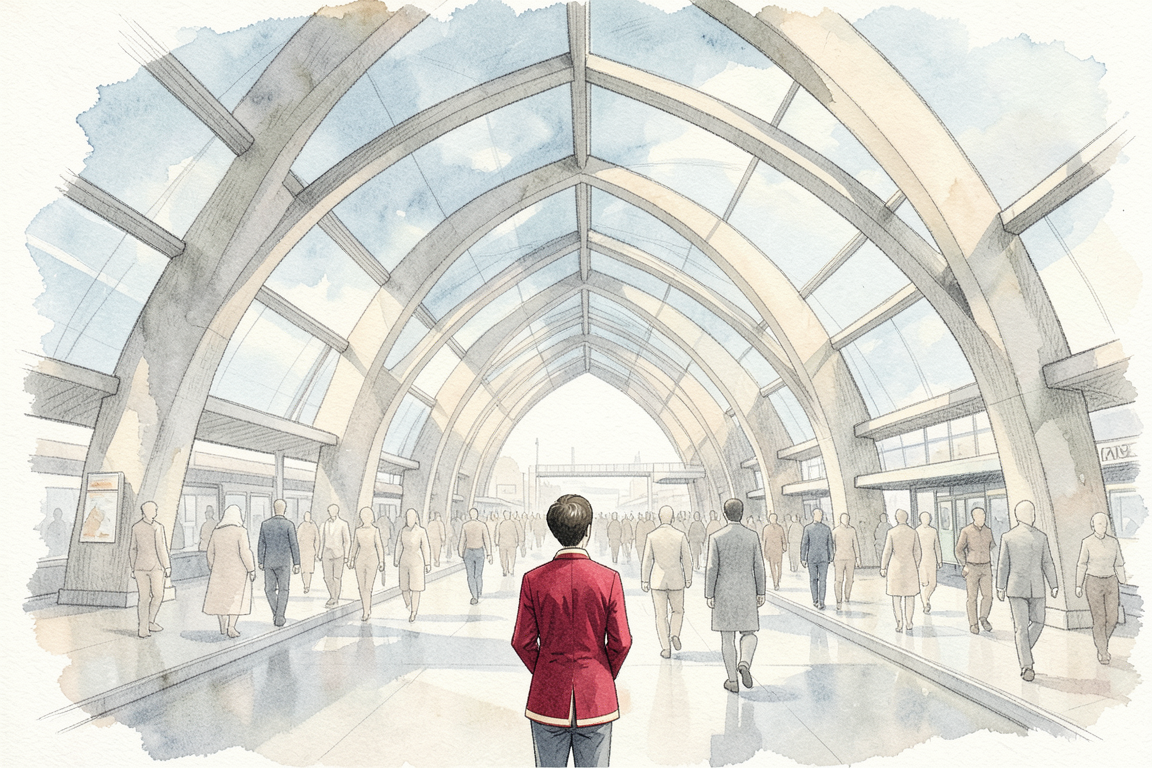
Elias knew the width of the transit hub by the sound of feet. When the central lane narrowed, the quick double step of people changing levels became a single shuffle. This morning one lane had to stay clear for the lift from the low decks. It only came twice an hour. Elias walked the markings with his meter. A white bar charted the way to the senior grade. He had one shift left to finish without an exception. Below the last green mark there was a name he didn’t know yet. Kaelen’s shadow was twenty-three minutes old.
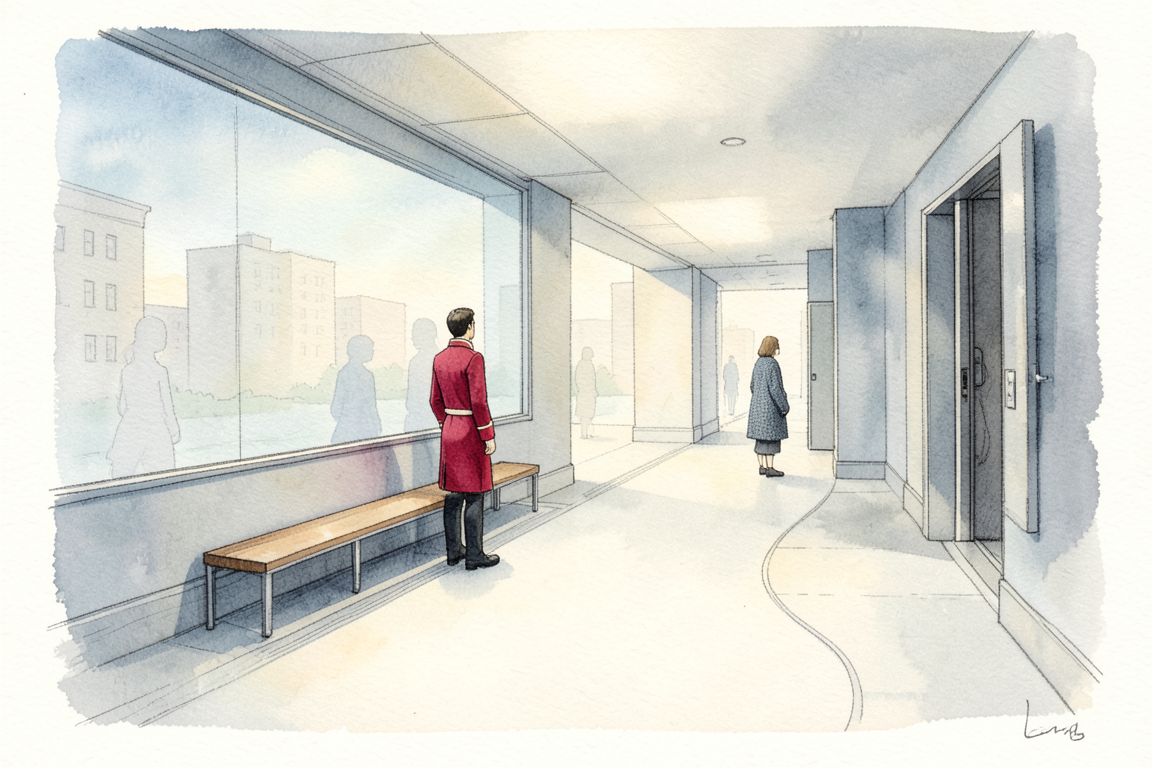
The glass at the edge of the shadow looked ordinary until Elias tapped it. He heard the tap from behind him. That meant the field was pressing outward, nearly into the lane. Kaelen sat inside with both hands around a playback disk. When Elias raised the meter, Kaelen lowered one hand and held up a finger. Elias pointed to the lane. A lift had just opened and its passengers were threading past the field in single file. After the last person got through, Kaelen moved the bench a hand’s width inward. The sound at the glass shifted with it.
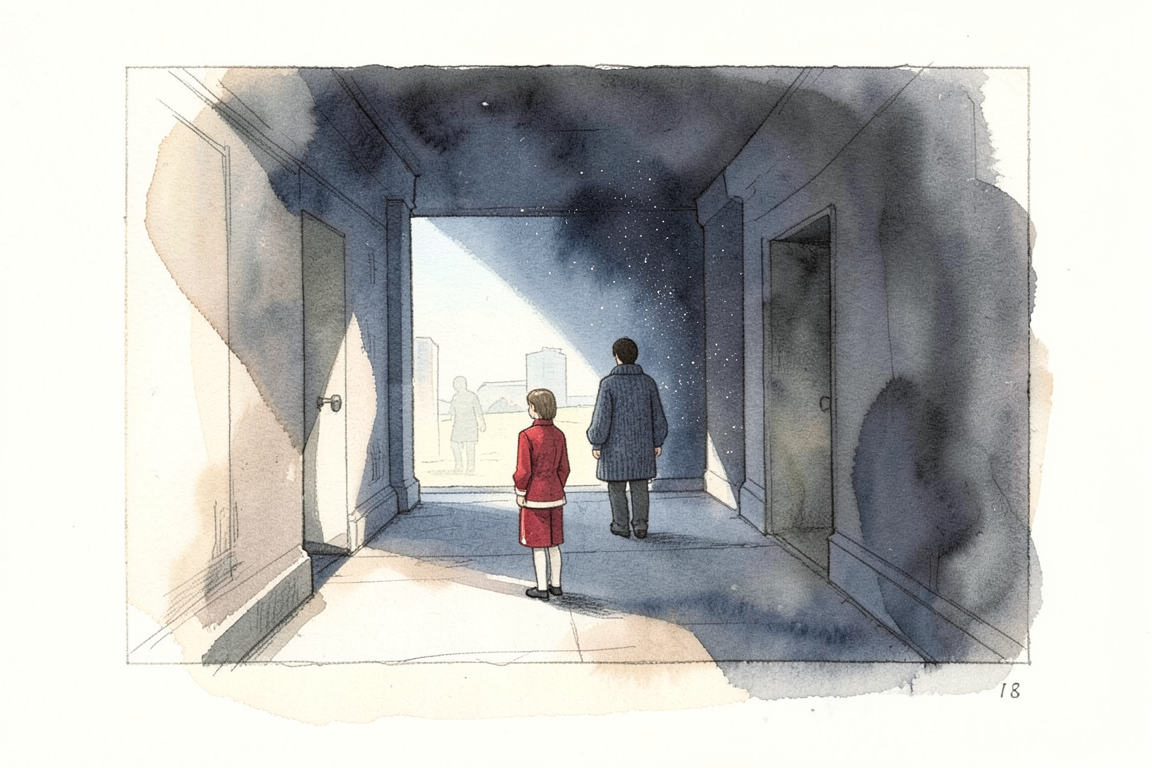
“How long?” Elias asked through the service jack. At first Kaelen thought he meant the recording and turned the disk so he could see the time remaining. Four minutes. Then Kaelen understood and started to put it away. The disk still hummed against the bench. “It won’t start there again,” Kaelen said, and took one hand off the case. Below the counter a thread of light showed what was left of the stored sensation. Elias had seen him touch the same place twice before moving his hand. He turned the service jack so the lane couldn’t hear them.
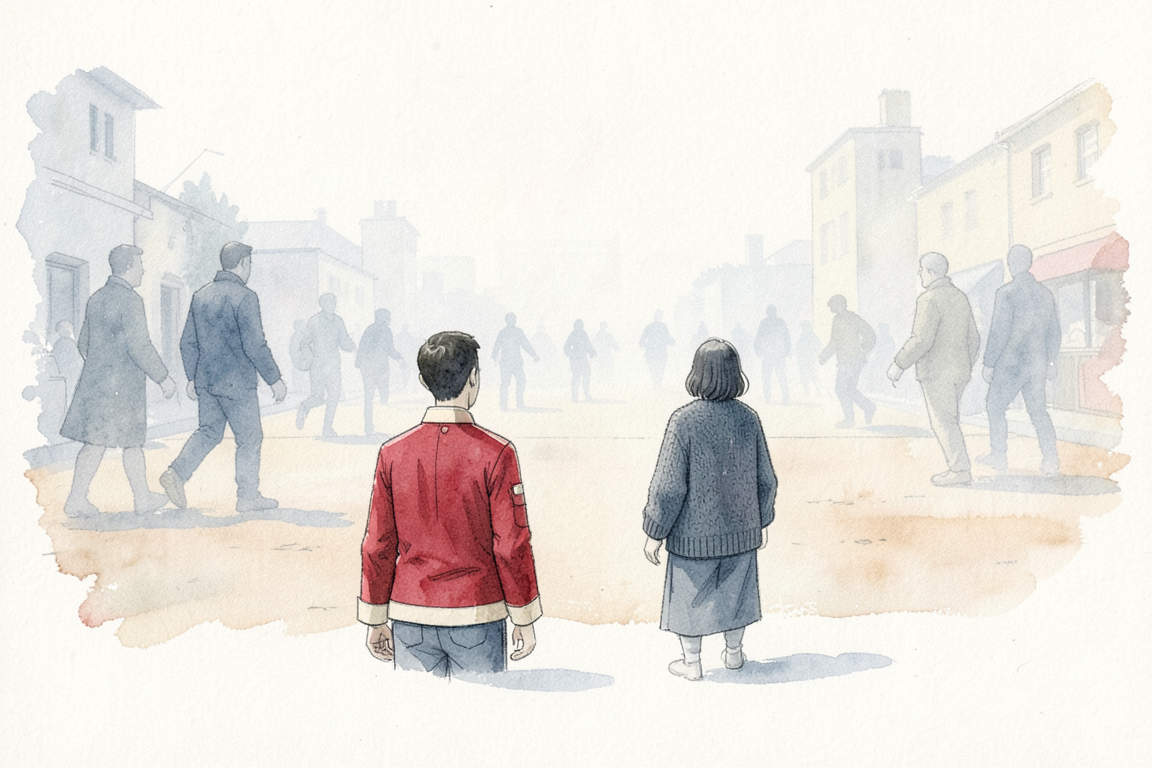
Elias knew the penalty by heart. A shadow over twenty minutes without a permit counted as hoarding. The next trip Kaelen tried to book would drop behind every trip with a clean record. “I can move it,” Kaelen said. “Up to the old baggage recess. Can it stay on while I carry it?” Elias looked at the space between them and the recess. The lane could survive one field moving across it, provided the lift was shut. He asked Kaelen whether he wanted help with the disk. Kaelen put it inside his coat and asked for help with the bench.
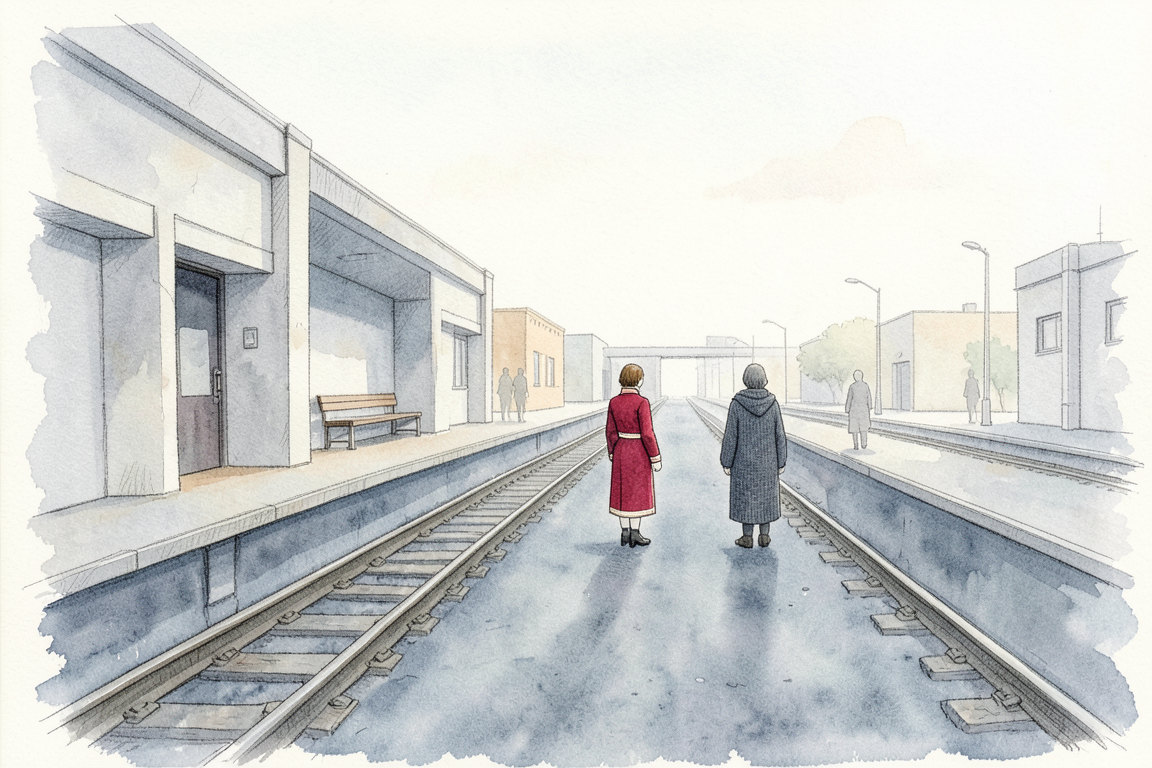
The maintenance recess had space for a bench and a narrow strip of floor. Elias showed Kaelen where the shadow would end. From there it would disturb neither the lift nor the lane, but the grid would still count the minutes. Elias could create a service blind spot, a ghost zone. It came with a manual log reconciliation, low down in the station, where the pumps ran against the walls. An unresolved exception at shift close would drop him from this cycle’s promotion list. He checked the time. He could hear Kaelen waiting without asking again.
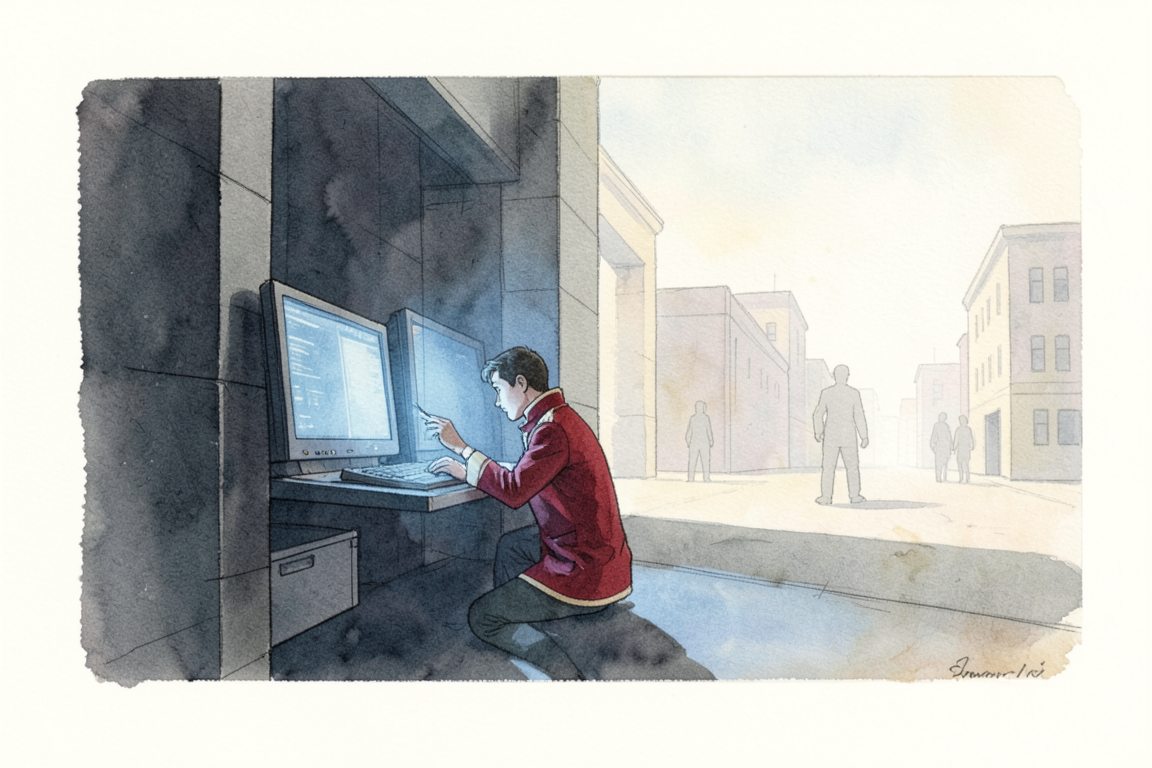
Elias held his meter against the recess wall and invoked the maintenance override. The shadow settled with a low hum that went through the bench before it went through the air. On his meter the lane came back green. The white bar for the senior grade went gray. Elias kept looking until the date of the next review replaced his name. Then he showed Kaelen where to press when he wanted the field gone. Kaelen tried the button through his coat, with the disk still held against his ribs. “I’ll wait outside the line,” Elias said.
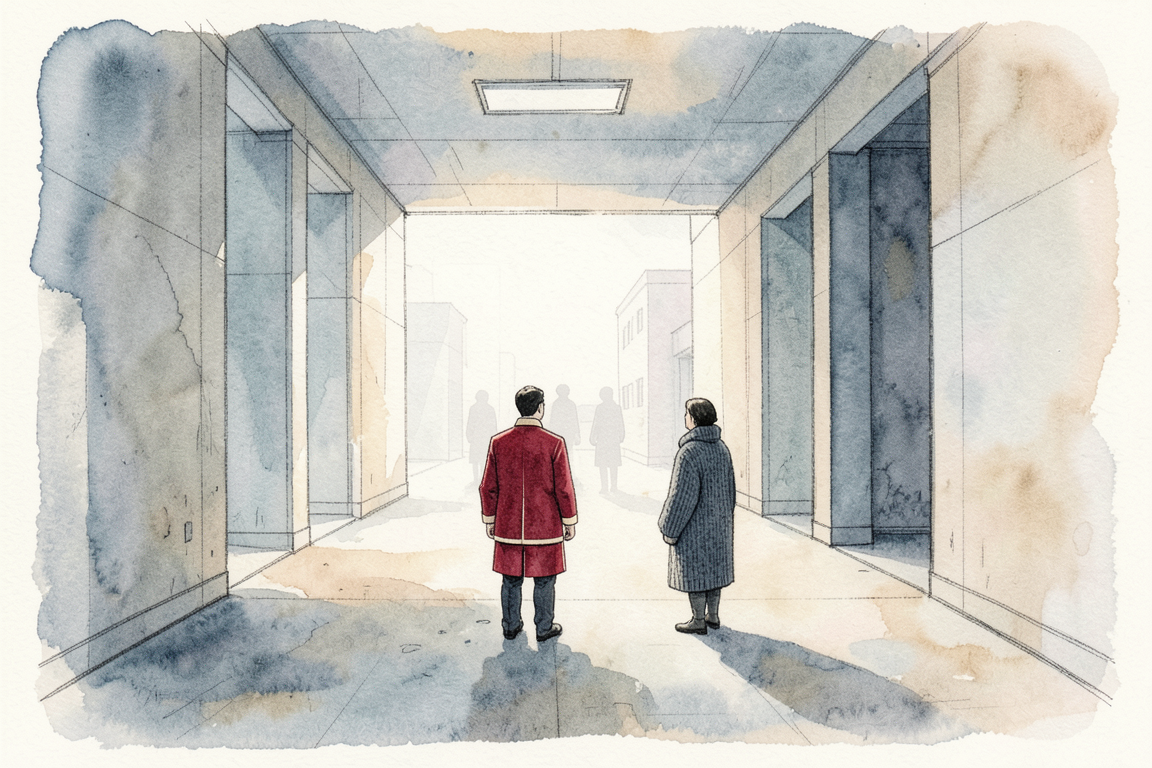
From outside, the recess looked empty. Elias waited by the old baggage track while the next lift emptied past him. Inside, Kaelen took the playback disk out of his coat. The last sound came with the feeling of a thumb brushing the heel of his hand. He had remembered a whole sentence and had been wrong about how much was left. He held still through the small scrape that followed. By the time it ended, the pressure at his palm had gone. When the disk went cold, Kaelen pressed the button Elias had shown him and stood up.
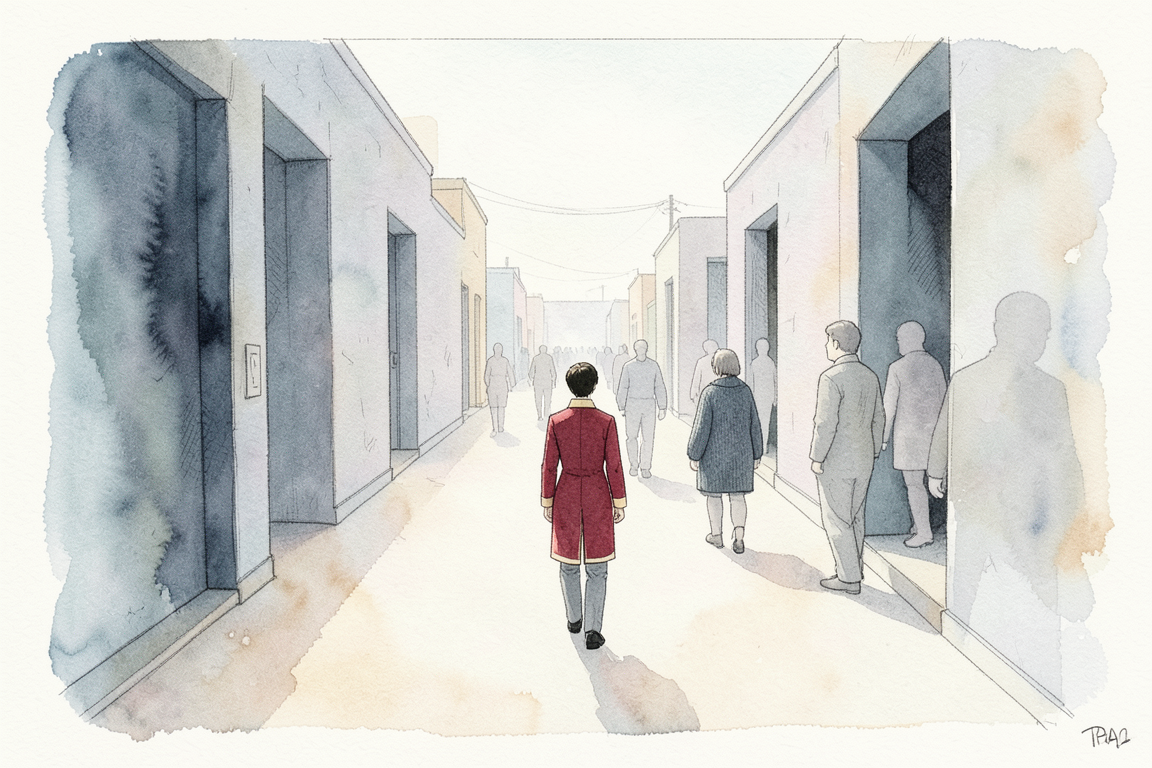
Elias was filling in the paper side of the exception log when Kaelen came out. He had left the line for a passenger blank. Kaelen looked at the page and asked if he could write down the width they’d measured. Elias handed him the pencil. Kaelen entered the clearance, checked it against the mark on the floor and added the width of the bench. He drew the recess in three lines, stopping the pencil where the public lane began. Elias folded the sheet so the little plan was on top. The place where the name would go stayed empty.
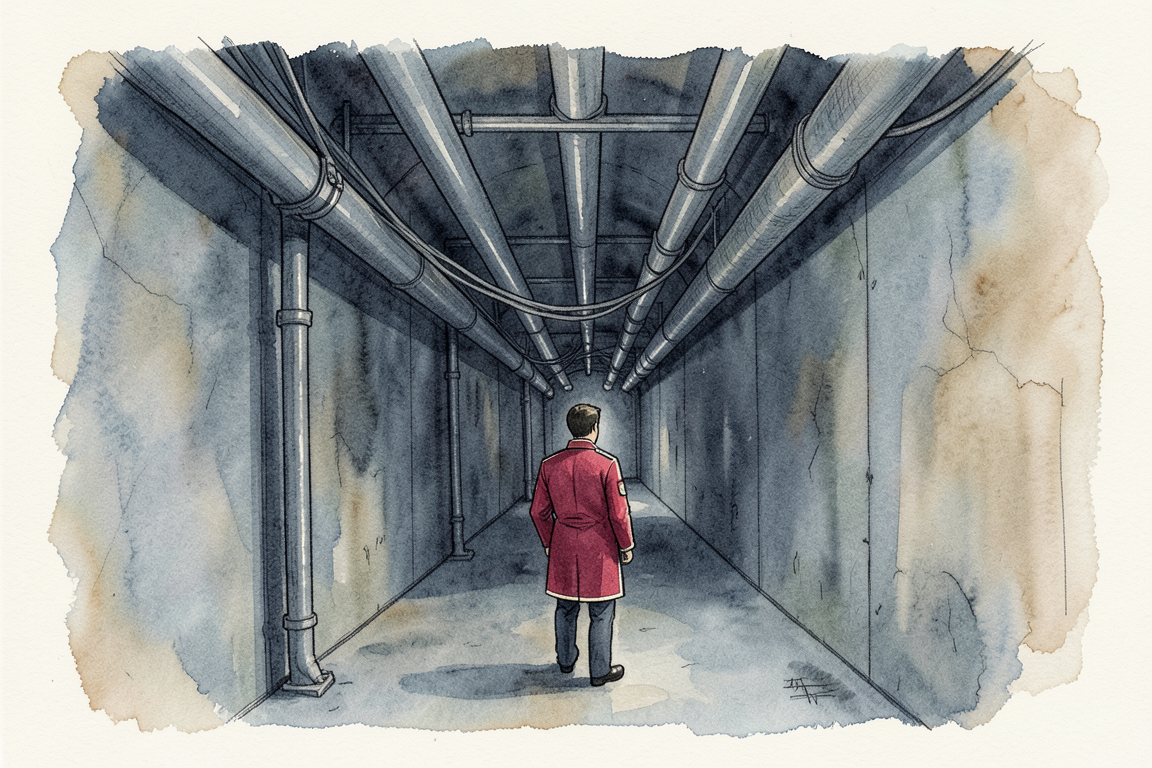
In the low-priority maintenance tunnel, Elias had to hold the wrench against each sensor housing until its vibration carried through the handle. In the noise it was the quickest way to find which record belonged to which eye. He reconciled the skipped interval by hand, leaving the lane counts intact and clearing the occupancy tag that would have identified Kaelen. His lift home went without him. He knew because the pipe along the wall gave two knocks as the doors closed. Elias set the wrench down for a moment. Then he slid along to the last sensor.
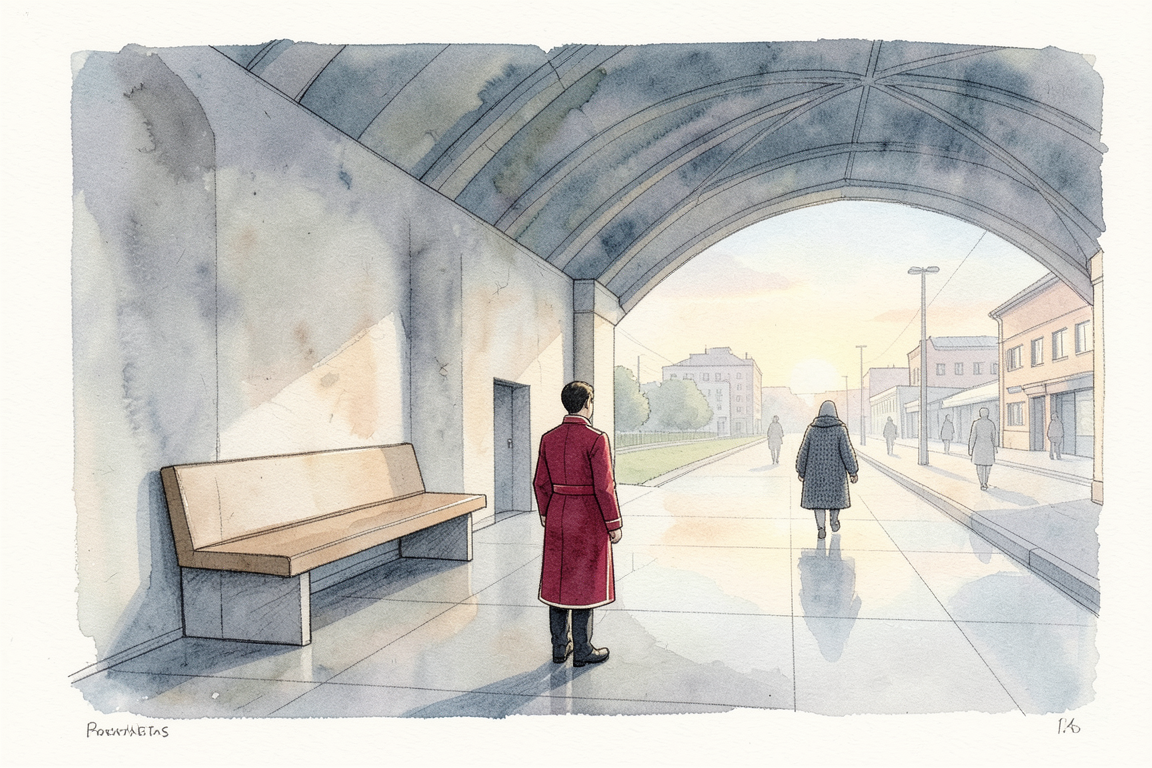
Kaelen was in the recess again the next morning, with the bench against the wall and the disk inside his coat. The field was off. He had left room beside him on the bench. Elias came to the edge of the recess and rested a hand on the wall. Kaelen moved his coat away from the empty place and looked up. He waited until Elias had stepped inside before he reached for the button. For the first few minutes they could hear each lift arrive. Then Kaelen looked across, and Elias left his hand where it was while the hub went quiet.